Loading…
About Tosin Orogun
An Expanding Field of Vision
My career has crossed journalism, technology, software engineering, digital transformation, entrepreneurship, organizational leadership, and research.
For a long time, the easiest way to explain that journey was chronologically: one role followed another. I now think there is a more useful way to understand it.
Each stage expanded the kinds of questions I was able to ask.
Journalism taught me to observe systems and investigate change. Technology taught me to build systems. Software engineering taught me how complexity behaves beneath the interface. Digital transformation expanded the question from technology itself to the organizations trying to use it. Leadership made the consequences of technological decisions more immediate. Research created the opportunity to examine those questions more rigorously. Strategy and innovation brought them together around a larger concern.
How do people and organizations remain valuable, capable, relevant, and competitive when technological change alters what is possible?
Not multiple careers. An expanding field of vision.
Chief Technology and Innovation Officer
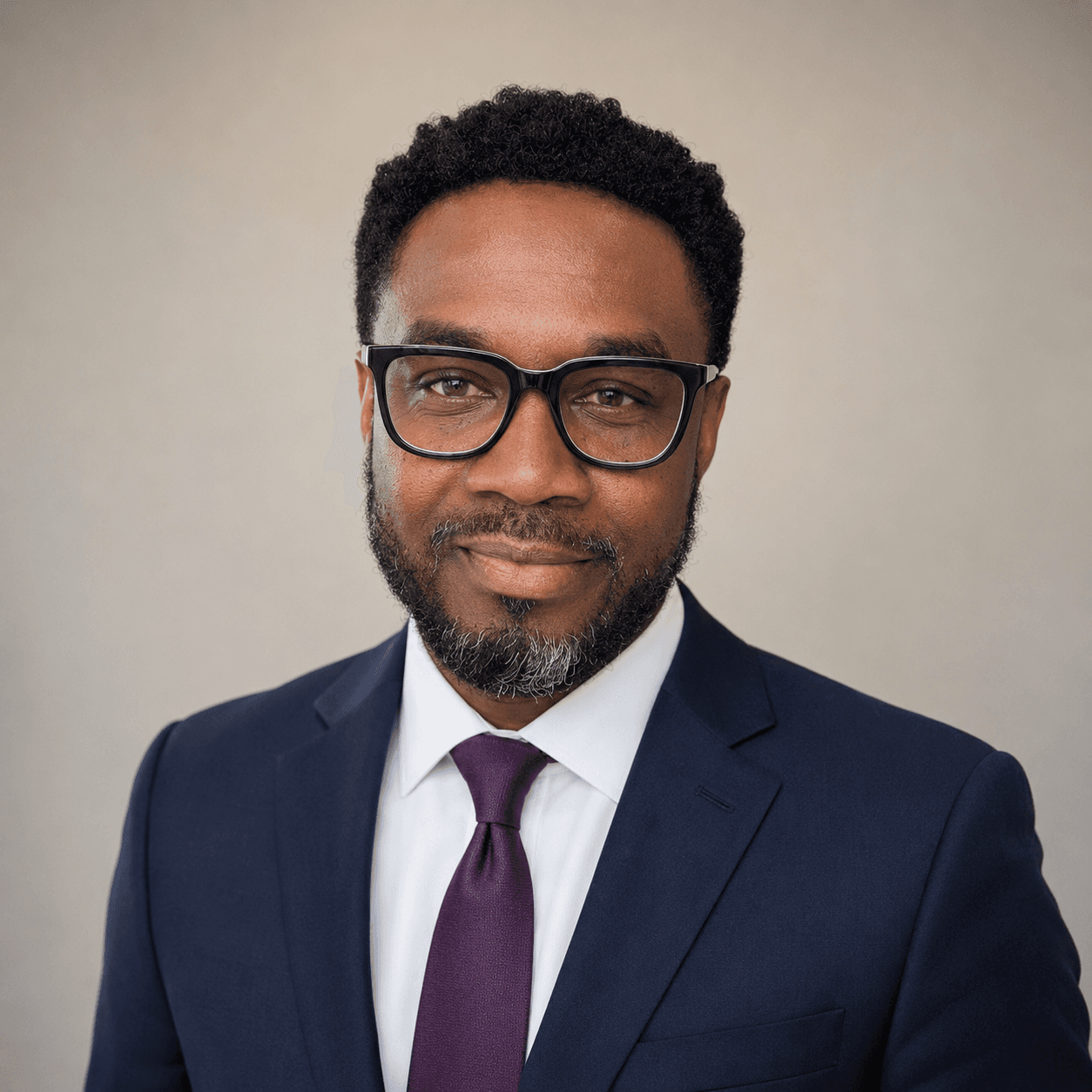
I explore how technological change reshapes organizations, work, competitive advantage, and the value people and institutions create.
Observe
Journalism & Communication
My journey began with journalism and communication.
Long before I was thinking about software architectures, digital platforms, artificial intelligence, or organizational transformation, I was learning how to ask questions.
Journalism teaches you that what is visible is not always the whole story. You learn to look for relationships between events, institutions, incentives, people, and consequences. You learn to work across different perspectives. And, perhaps most importantly, you learn that complexity has little public value if it cannot be communicated clearly.
Those instincts never left. They simply found new subjects.
My later work in regional communications, international development, advocacy, and information systems expanded that perspective across organizations and countries. It also introduced a recurring theme that continues to influence my thinking: information becomes useful only when people can discover it, understand it, trust it, and act on it.
Learning to ask questions, investigate systems, interpret change, synthesize complexity, and communicate clearly.
Build
Technology & Software Engineering
Technology gradually changed my relationship with systems. I moved from communicating through digital platforms to building them.
What began with the web expanded into web development, databases, increasingly complex applications, software architecture, APIs, content-management systems, enterprise platforms, and eventually multi-platform systems.
Programming changed the way I thought. Software forces abstraction to become operational. A concept eventually has to become a data model. A process becomes logic. A relationship becomes an interface. An assumption becomes behavior someone else will encounter.
Building technology taught me something that remains central to my work today: Technology is never only technology once people and organizations begin depending on it.
Moving from observing systems to designing and building them.
Transform
Digital Transformation
Software engineering naturally led to a larger question: What happens when technology moves beyond a product or application and begins changing how an organization operates?
That question drew me increasingly into digital transformation. The work became broader: enterprise platforms, cloud systems, integrations, data, cybersecurity, digital products, operational processes, workforce systems, collaboration, automation, and technology strategy.
I was no longer thinking only about whether a system worked. I was thinking about whether the organization around the system worked better because of it.
Organizations do not transform simply because they purchase modern technologies. Transformation happens when technology becomes aligned with capability, process, decision-making, experience, incentives, and strategy.
Expanding the question from how technology works to how organizations change through technology.
Lead
Technology & Organizational Capability
As my work moved further into technology leadership, another dimension became clearer: Technical decisions are ultimately strategic decisions.
Architecture affects what an organization will be able to change later. Data affects what it will be able to understand. Cybersecurity affects what it can safely trust. Product decisions affect the people the organization can serve. Automation changes not only cost, but roles and capabilities. Artificial intelligence now makes those relationships even more consequential.
My leadership work has therefore increasingly brought together software engineering, digital transformation, product architecture, cloud and AI, enterprise systems, workforce capability, and organizational strategy.
The technologies change. The deeper challenge remains: How do we convert technological capability into durable organizational value?
Connecting architecture, platforms, AI, security, people, and technology decisions to organizational value.
Understand
Research
Professional experience produces knowledge. It also produces unanswered questions.
My doctoral research in Strategy and Innovation has given me the opportunity to examine some of those questions more systematically.
My dissertation, The Contingent Effect of Job Fit on the Relationship between Skills Gap and Employee Performance in Nigerian Software Development Firms, examines workforce capability and employee performance within software-development organizations.
The research explores relationships among hard skills, soft skills, person–job fit, person–organization fit, and employee performance, including task, adaptive, and contextual dimensions of performance.
Research allows me to examine those questions with a discipline that experience alone cannot provide.
Examining more rigorously why capability, fit, innovation, and organizational performance develop as they do.
Strategize
Strategy & Innovation
The further I have gone into technology, the less interested I have become in technology as an isolated subject. I am increasingly interested in its consequences.
What happens when a capability that was once scarce becomes widely available? What happens to a business whose customers acquire tools that allow them to perform part of the work they previously outsourced? What happens to professional expertise when artificial intelligence can produce a credible first analysis?
These are technology questions. But they are also questions of innovation, economics, organizational design, strategy, and human value.
My current writing and research increasingly investigate that territory.
Turning understanding into questions about choices, competitive advantage, adaptation, value migration, and future value.
Contribute
Ideas & Thought Leadership
This website represents the next stage of that journey. It is where I intend to bring together research, professional practice, frameworks, essays, white papers, and public conversations around technological change.
My aim is not to comment on every new technology. I am more interested in the deeper transitions beneath the headlines: Where is value moving? Which capabilities are becoming abundant? Which ones remain scarce? How will organizations need to change? What will distinguish expertise when intelligent tools become widely accessible? And how do we prepare people to create meaningful value in that environment?
Those questions connect the different chapters of my journey far more clearly than any job title ever could.
The field of vision has kept expanding. I expect it to continue doing so.
Developing frameworks, research, white papers, articles, and practical perspectives for navigating technological change.
Not multiple careers. An expanding field of vision.
The next horizon
Looking Forward
Technology will continue to alter the distribution of capability. Some work will become easier. Some expertise will become less scarce. New forms of expertise will become more valuable.
Research helps us understand change. Strategy helps us respond to it. But ultimately, knowledge becomes most valuable when it expands what people are capable of doing.